
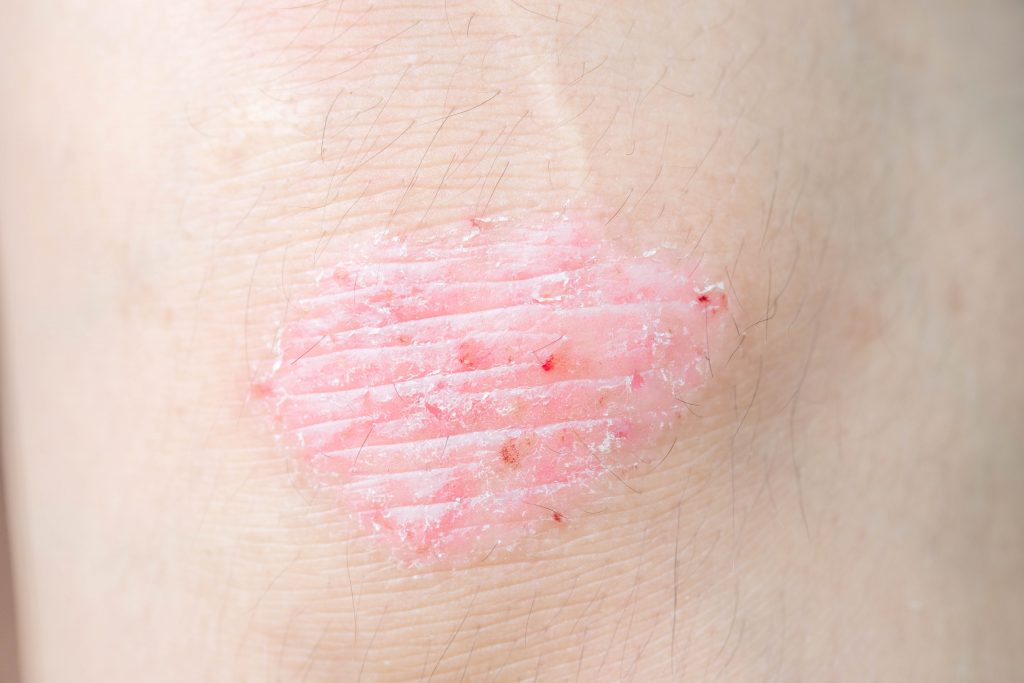
August is Psoriasis Awareness Month, and searches for flare-up remedies, scalp treatments, and “is it eczema or psoriasis?” always spike this time of year. If you’ve been scratching your head (sometimes literally) trying to work out what’s going on with your skin, you’re not alone — psoriasis is one of the most common chronic skin conditions seen by clinics across the UK.
At E&G Skin Clinic in Morningside, Edinburgh, we see patients throughout the year who are managing psoriasis, often without ever having had it properly diagnosed. Here’s a straightforward look at what it is, how it differs from eczema, and what actually helps.
What Is Psoriasis, Really?
Psoriasis is a long-term condition that speeds up the life cycle of skin cells. This causes them to build up rapidly on the surface. The result is those raised, scaly, often itchy patches most people associate with the condition — typically on the elbows, knees, scalp, and lower back, though it can appear almost anywhere.
It’s not contagious, and it’s not caused by poor hygiene. It’s an immune-related condition, and it tends to flare and settle in cycles, often triggered by stress, weather changes, certain medications, or skin injury.
Psoriasis vs Eczema: How to Tell the Difference
This is one of the most searched questions every August, and it’s a fair one — the two conditions can look similar at a glance, but they behave quite differently:
- Psoriasis patches tend to have well-defined edges and a silvery-white scale, and commonly appear on the elbows, knees, and scalp.
- Eczema patches usually have less-defined borders, feel more intensely itchy, and often appear in the creases of the elbows and knees or on the hands and face.
- Onset can also be telling — eczema frequently starts in childhood, while psoriasis often first appears in early adulthood, though it can develop at any age.
Self-diagnosing from a search engine only gets you so far. If you’re unsure which one you’re dealing with, a proper skin assessment will save you time, money, and frustration on the wrong products.
Managing a Flare-Up
If you’re in the middle of a flare, a few things genuinely help:
- Keep skin consistently moisturised — thick, fragrance-free emollients work best, applied while skin is still slightly damp.
- Avoid known triggers where possible — this might mean managing stress levels, limiting alcohol, or being mindful after a skin injury or infection.
- Resist the urge to over-exfoliate or scrub scaly patches; this can worsen irritation and prolong the flare.
- Be cautious with over-the-counter steroid creams used long-term without guidance — they can thin the skin over time.
Best Emollients for Scalp Psoriasis
Scalp psoriasis is particularly frustrating because ordinary shampoos and conditioners often aren’t enough. Look for:
- Emollients or scalp treatments containing salicylic acid, which helps soften and lift scale
- Coal tar-based shampoos, which can calm inflammation and slow cell turnover
- Thick, occlusive scalp oils or ointments left on overnight before washing out
If scaling is severe, cracked, or bleeding, this isn’t a job for a supermarket shelf — it warrants a clinical review.
When to See a Clinician
Psoriasis can usually be managed well with the right routine, but it’s worth seeking a professional assessment if:
- You’re not sure whether it’s psoriasis or another skin condition
- Over-the-counter treatments aren’t making a difference after a few weeks
- Patches are spreading, painful, or affecting your daily life
- You notice joint pain or stiffness alongside skin symptoms, which can indicate psoriatic arthritis
Book a Skin Assessment in Edinburgh
Psoriasis Awareness Month is a good prompt to stop guessing and get a proper answer. If you’ve been managing symptoms alone, or you’re just not sure what’s causing your flare-ups, our Morningside clinic can help.
Book a consultation with E&G Skin Clinic.
FAQs
Is psoriasis curable? No, but it’s very manageable. Most people significantly reduce flare-ups with the right combination of skincare, trigger management, and, where needed, clinical treatment.
Can diet affect psoriasis? Some patients find that certain foods or alcohol worsen flares, though triggers vary from person to person. Keeping a symptom diary can help identify your own patterns.
Is scalp psoriasis the same as dandruff? No. Dandruff causes fine, loose flaking, while scalp psoriasis produces thicker, more defined, scaly patches that can extend beyond the hairline.
Should I stop using steroid creams if they’re not working? Don’t stop or adjust treatment without guidance — book a review so a clinician can assess what’s actually happening with your skin.