
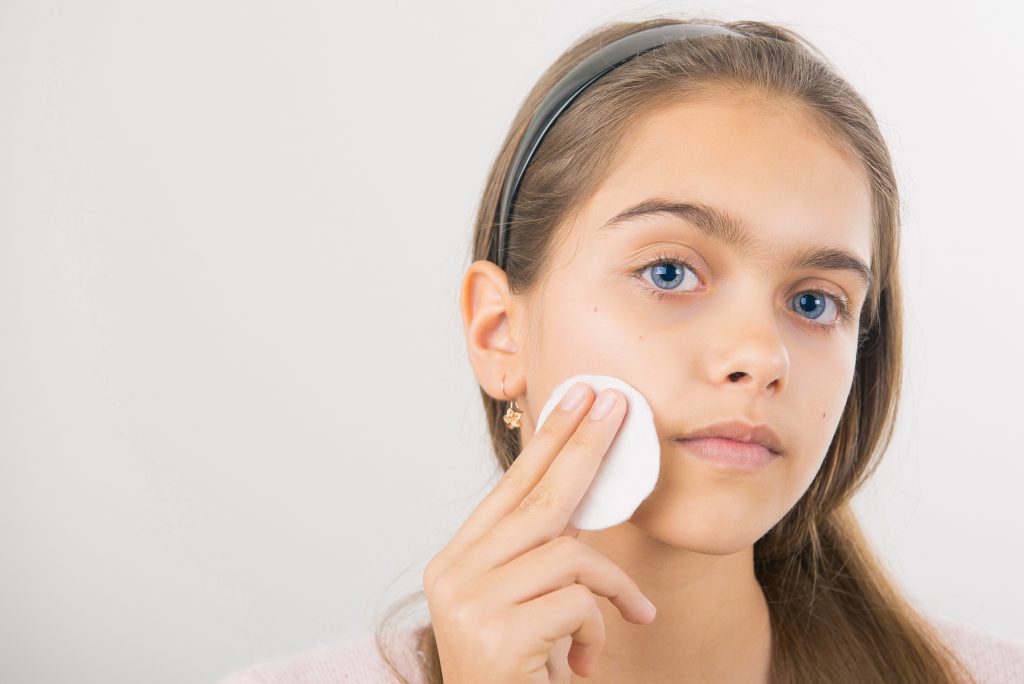
A new skincare trend is causing concern among dermatologists across Scotland – and it’s affecting a much younger age group than you might expect.
Following the so-called online beauty hacks and tricks and products being sold as well as the arrival of major beauty retailers in Scottish cities, dermatologists have reported a sharp rise in teenagers turning up with visibly damaged, irritated skin. The cause isn’t a new allergy or infection but skincare itself.
What’s actually happening?
Many teenagers are now using potent anti-aging ingredients that were never designed for young skin. Products containing retinoids, exfoliating acids, and high-strenght vitamin C, formulated for adults and aging skin, managing fine lines, pigmentation, or slower cell turnover, are being applied daily by skin that does not need nor can tolerate this level of intervention at all.
The result is a weakened skin barrier. Instead of glowing “glass skin,” many young users are left with:
Redness and visible sensitivity
Tightness, flaking or peeling
Increased reactivity to products that never used to cause problems
In some cases, contact dermatitis requiring clinical treatment
Put simply, skin that’s stripped of its natural oils and protective barrier becomes far more vulnerable to irritation, sensations, and long term damage; the opposite of the skincare routine these products are marketed as delivering.
Why Teenage Skin Doesn’t Need Anti-Aging Actives
Teenage skin is still developing. It typically produces more natural oil. Renews itself faster and simply doesn’t have the same needs as skin in its thirties, forties, or beyond. Introducing strong actives at this stage doesn’t prevent future aging. It can actively damage the skin barrier that’s meant to protect it. While trying to prevent future aging, you are getting yourself one step closer to aging by misusing products.
A simple, gentle routine- cleanser, moisturiser, and SPF is usually all that is needed at this age.
Anything stronger should be introduced later, and ideally under professional guidance.
When to Seek Clinical Advice
If your skin ( or your teenager’s) is showing ongoing redness, Sensitivity, or reacts unpredictably to products that used to feel fine, its with having it properly assessed rather than fixing it with more products. A damaged skin barrier can take time to repair, and using the wrong ingredients during that process can make things worse.
At E&G Skin Clinic, we can assess skin barrier damage and recommend a suitable recovery routine tailored to the individual.
Book your free consultation to find out where your skin is at.